R&D Projects
Here you can find summary information on some of the long-term research and development (R&D) projects hosted by IN2PAST, both collective and individual, as well as mentions to major projects our associate laboratory is or was also involved with.
CLIMACT-CH
Acronym
CLIMACT-CH
Project name
Impacts of climate change on tangible and intangible cultural heritage: a Brazil-Portugal study
Call/ Funding
FCT 2025 Call for scientific cooperation between Brazil and Portugal (Concurso 2025 para cooperação científica entre Brasil e Portugal)
Reference
FIOCRUZ/0004/2025
Summary
The right to memory, historically linked to reparations for social injustices, takes on new layers of meaning in the face of the challenges posed by climate change. In contexts marked by extreme events, forced displacement and environmental degradation, traditional and peripheral communities see not only their territories threatened, but also their memories, histories and ways of life. The loss of territory often means the erasure of cultural practices, knowledge and collective bonds that are deeply rooted in the environment.
Project CLIMACT-CH aims to investigate the impacts of climate change on cultural heritage, considering the scale of the territory and the material and immaterial aspects, by studying Brazilian and Portuguese historic sites that are vulnerable to the effects of climate change. Taking as a reference the different stages of the risk management process – understanding the context, identifying, analysing, evaluating and treating risks – the project proposes to analyse the main local vulnerabilities in relation to built heritage and traditional practices and knowledge, and to define strategies for their preservation.
The empirical objects selected are places recognized as UNESCO World Heritage Sites or that were included in the tentative list, that share similar typologies and challenges. In Brazil, the historical ensemble of the Oswaldo Cruz Foundation in the city of Rio de Janeiro and the mixed site of Paraty and Ilha Grande were selected; in Portugal, the historical site of Évora and the historical heritage of Alcácer do Sal, Setúbal District, were selected. From the perspective of citizen science, the aim is to strengthen the links between the teams from the participating institutions and the local population of the different territories to be analysed, with a view to contributing to the quality of life and protecting the identity, memory and history of these populations in the face of the challenges related to the climate emergency.
Team
Principal Investigators
Carla Coelho, Casa de Oswaldo Cruz/Fiocruz
António Candeias, HERCULES Laboratory – University of Évora / IN2PAST
Co-principal Investigator
Teresa Reis, HERCULES – UÉvora / IN2PAST
Other IN2PAST team members
Ana Teresa Caldeira, HERCULES – UÉvora / IN2PAST
Carlo Bottaini, HERCULES – UÉvora / IN2PAST
Cátia Salvador, HERCULES – UÉvora / IN2PAST
Fabio Sitzia, HERCULES – UÉvora / IN2PAST
José Mirão, HERCULES – UÉvora / IN2PAST
Leonel Alegre, HERCULES – UÉvora / IN2PAST, _ARTERIA_LAB
Mathilda Coutinho, HERCULES – UÉvora / IN2PAST
Natália Melo, IHC – UÉvora / IN2PAST, _ARTERIA_LAB
Rosário Martins, HERCULES – UÉvora / IN2PAST
Ruy Llera Blanes, CRIA – Iscte / IN2PAST
Sara Valadas, HERCULES – UÉvora / IN2PAST
Sílvia Arantes, HERCULES – UÉvora / IN2PAST
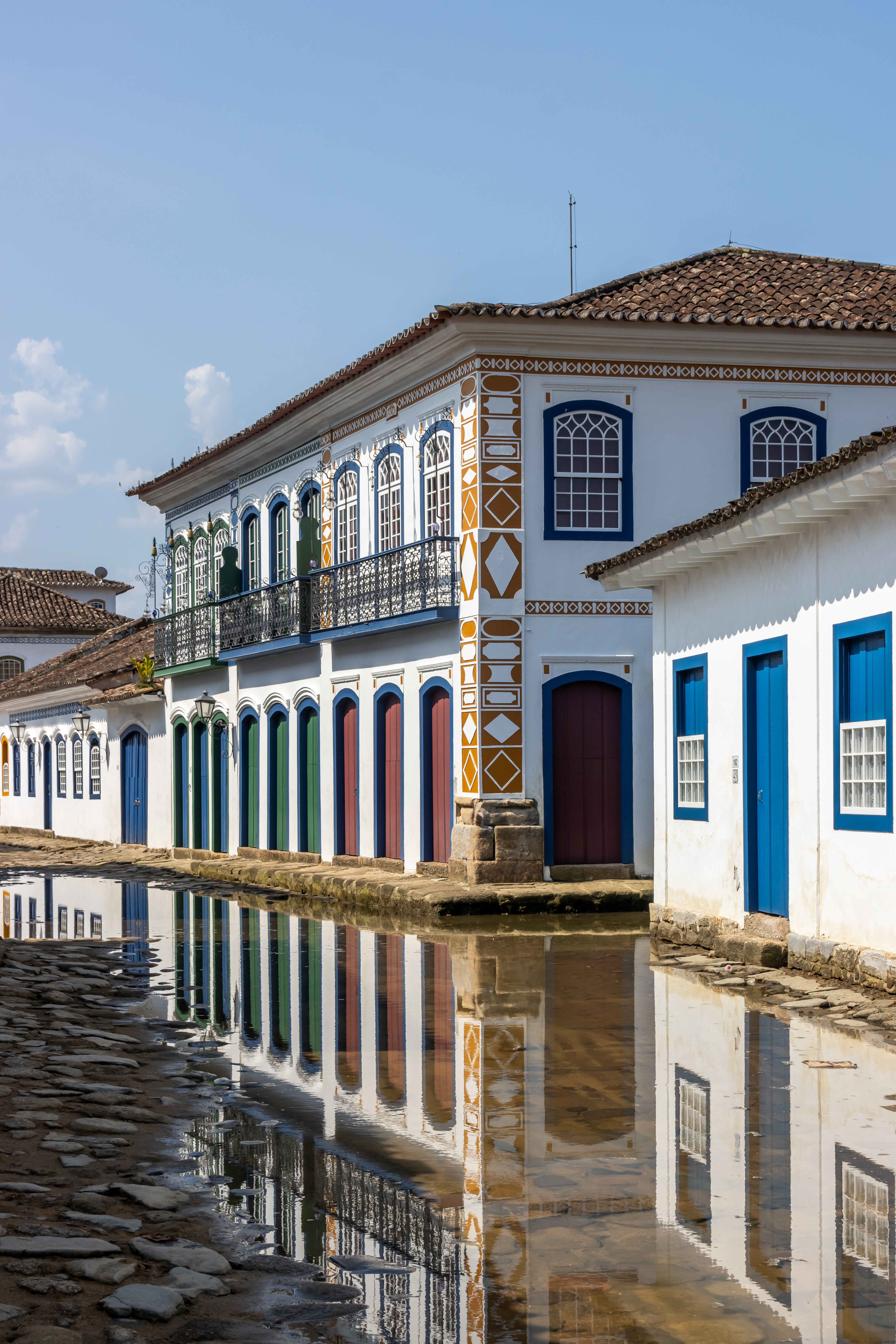
High tide at Rua da Praia, Paraty, Rio de Janeiro state, Brazil © Mike Peel (www.mikepeel.net), under license CC-BY-SA-4.0
DT4SST-CH.PT
Acronym
DT4SST-CH.PT
Project name
Digital Twins for Smart, Sustainable Tourism and Cultural Heritage Preservation
Call/ Funding
FCT Call DigitalTwins4SmartTerritories (DT4ST): Gémeos Digitais para Territórios Inteligentes
Reference
2025.00122.DT4ST
DOI
Summary
Project Digital Twins for Smart, Sustainable Tourism and Cultural Heritage Preservation, led by Universidade NOVA de Lisboa through NOVA LINCS and VICARTE – NOVA FCT, and IN2PAST, aims to develop and implement Digital Twin (DT) technology to enhance the management, preservation, and sustainable tourism of Portugal’s cultural heritage. Building upon the Património Cultural 360 project’s large-scale digitisation efforts, this initiative will create dynamic digital representations of heritage sites by integrating 3D digitization, sensor data (IoT), artificial intelligence (AI), and immersive storytelling.
By merging digital innovation, cultural heritage conservation, and smart tourism, DT4SST-CH.PT seeks to establish a scalable and adaptable framework that enhances heritage preservation while fostering engaging and sustainable visitor experiences. Also contributing to policy making by developing guidelines and recommendations for adopting DT technology in cultural heritage, the project aims to serve as a model for future DT applications in heritage management, promoting high-quality tourism that respects cultural and environmental sustainability.
Among other advantages, digital replicas will enable: i) real-time monitoring of delicate environments or potential risks, such as flooding at Santa Clara-a-Velha or visitor pressure at the Belém Tower; 2) optimise visitors flow, maintaining site integrity while enhancing the visitor experience; 3) contextualize objetcs through augmented reality (AR); 4) interactive experiences through gamification. All the while contributing to increase public interest, enhance education, deepen historical understanding, and support sustainable resource management and targeted conservation interventions.
Planned pilot sites to integrate DTs and other technologies are the archaeological sites of Santa Clara-a-Velha and the Roman Ruins of Milreu, the Belém Tower, the Alcobaça Monastery, the National Tile Museum and the Escoural Cave.
Team
Principal Investigator
Nuno Correia, NOVA LINCS – NOVA FCT
Co-principal Investigators
António Candeias, HERCULES – UÉvora / IN2PAST
Márcia Vilarigues, VICARTE – NOVA FCT
Other IN2PAST team members
Alexandra Curvelo, IHA – NOVA FCSH / IN2PAST
Ana Teresa Caldeira, HERCULES – UÉvora / IN2PAST
Carla Varela Fernandes, IHA – NOVA FCSH / IN2PAST
Carlo Bottaini, HERCULES – UÉvora / IN2PAST
Elisabete Pereira, IHC – UÉvora / IN2PAST
José Mirão, HERCULES – UÉvora / IN2PAST
Leonel Alegre, HERCULES – UÉvora / IN2PAST
Nuno Senos, IHA – NOVA FCSH / IN2PAST
Paulo Almeida Fernandes, IHA – NOVA FCSH / IN2PAST
Pedro Flor, IHA – NOVA FCSH / IN2PAST
Ricardo Castro, IHA – NOVA FCSH / IN2PAST
Teresa Teves Reis, HERCULES – UÉvora / IN2PAST
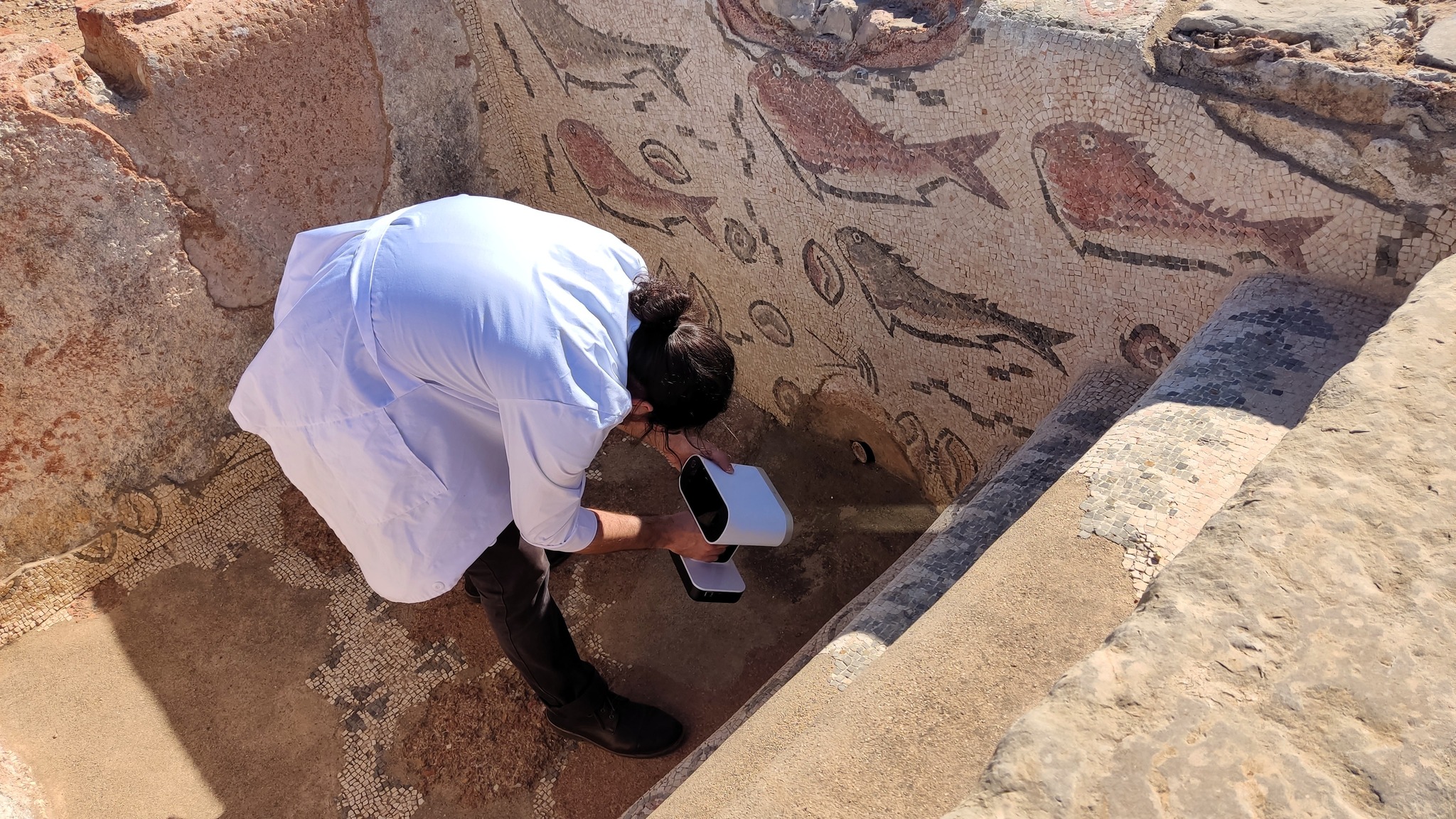
3D scanning of the Roman Ruins of Milreu, Faro, Algarve, November 2025 © 2024-2025 Património Cultural, I.P. All rights reseved
Património Cultural 360
Acronym
(UN)DESIRABLE
Project name
Património Cultural 360
Call/ Funding
Portugal’s Recovery and Resilience Plan, measure C04-i01-m02 – Digitisation of Arts and Heritage, Investment RE-C04-i01 – Cultural Networks and Digital Transition, Component 4 – Culture
Reference
N/A
DOI
N/A
Summary
Researchers from IN2PAST at NOVA FCSH are collaborating with project Património Cultural 360, conducting studies in fields such as anthropology, history, art history, and musicology to support the digital twins, virtual tours and films produced by the team of 50+ specialists in computer science, conservation and restoration, photography, 2D and 2D modelling, and graphic design.
With an initial investment of € 11,777,250 from Portugal’s Recovery and Resilience Plan (PRR, in the Portuguese acronym), funded by the EU, Património Cultural 360 was designed to make Portuguese cultural heritage available online, universally and freely, in digital format. Its main proponent is the state-run institute Património Cultural, I.P., with major partners being Museus e Monumentos de Portugal, E.P.E. (state-run ‘public business entity’ in charge of national museums, monuments, palaces and archaeological sites) and Universidade NOVA de Lisboa, with Márcia Vilarigues (Vicarte – NOVA FCT) and Nuno Correia (NOVA LINCS – NOVA FCT) as coordinators.
Funded through Measure C04-i01-m02 – Digitisation of Arts and Heritage, of Investment RE-C04-i01 – Cultural Networks and Digital Transition in Component 4 – Culture of the PRR, you can follow the project’s ongoing process on the Making Of Património Cultural 360 website. The digitisations produced as part of the project are being progressively made available on arquiv@ – the online archive of Património Cultural, I.P..
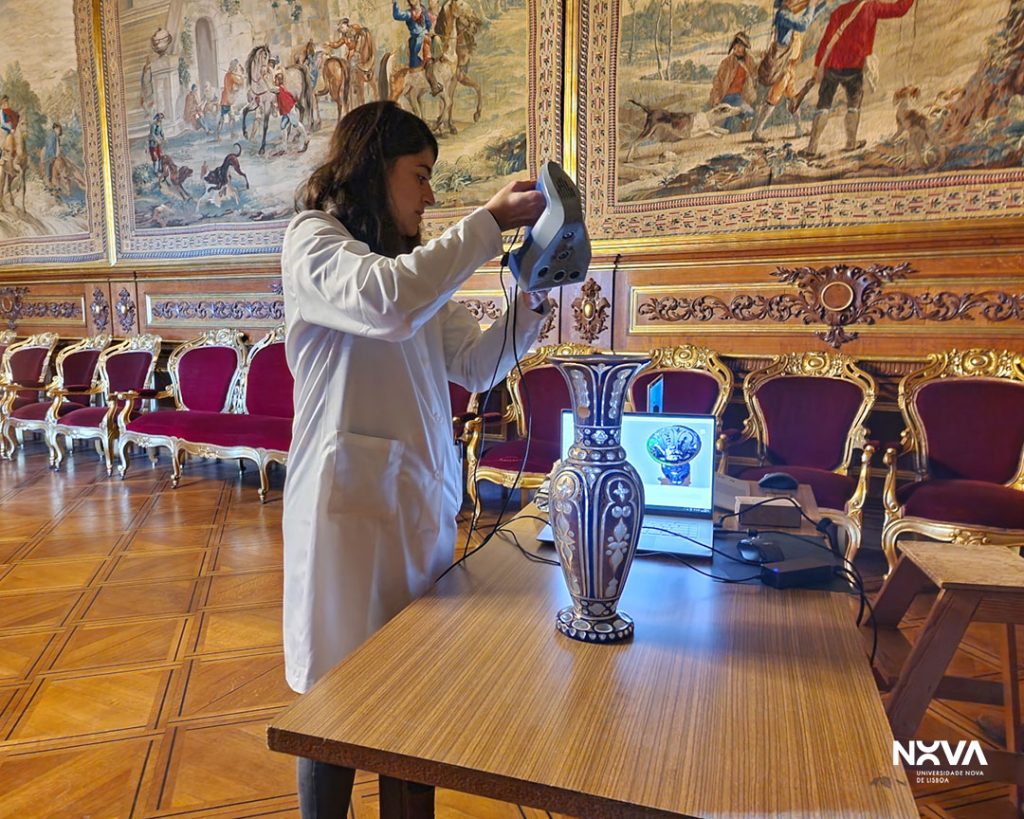
Making Of… Património Cultural 360. National Palace of Ajuda. © 2024-2025 Património Cultural, I.P. All rights reseved
Uses of the Medieval Past...
Acronym
None
Project name
Uses of the Medieval Past in the Construction of European Identities: The Case of Democratic Portugal (1974-2011)
Call/ Funding
Reference
2023.08126.CEECIND/CP2836/CT0057
Summary
This research project examines the ways the medieval past has been narrated, represented, and used in recent European history, taking the case of democratic Portugal from the Carnation Revolution of 1974 to the dawn of the debt crisis in the early 2010s as its basis. Although existing as a political entity since the Middle Ages, it was only at the dawn of the modern era that Portugal acquired the traits of a nation-state, based on certain features that liberal intellectuals traced to the Middle Ages.
The project addresses questions such as the role of the Middle Ages in the construction of Portuguese national, regional, and local identities, and the relationship between the uses of the medieval past and historical phenomena such as decolonization, European integration, and the rise of neoliberalism. It will correspondingly delve into three main topics – historiography and education policies, literary and artistic production, and heritage and tourism policies.
Pedro Martins adopts a comparative approach in order to integrate the Portuguese case into the broader European context. At a time when contrived narratives about the past are constantly deployed to serve political purposes, this project offers a window into assessing the relationship between history and civil society.
Principal Investigator
Pedro Martins, IHC – NOVA FCSH / IN2PAST
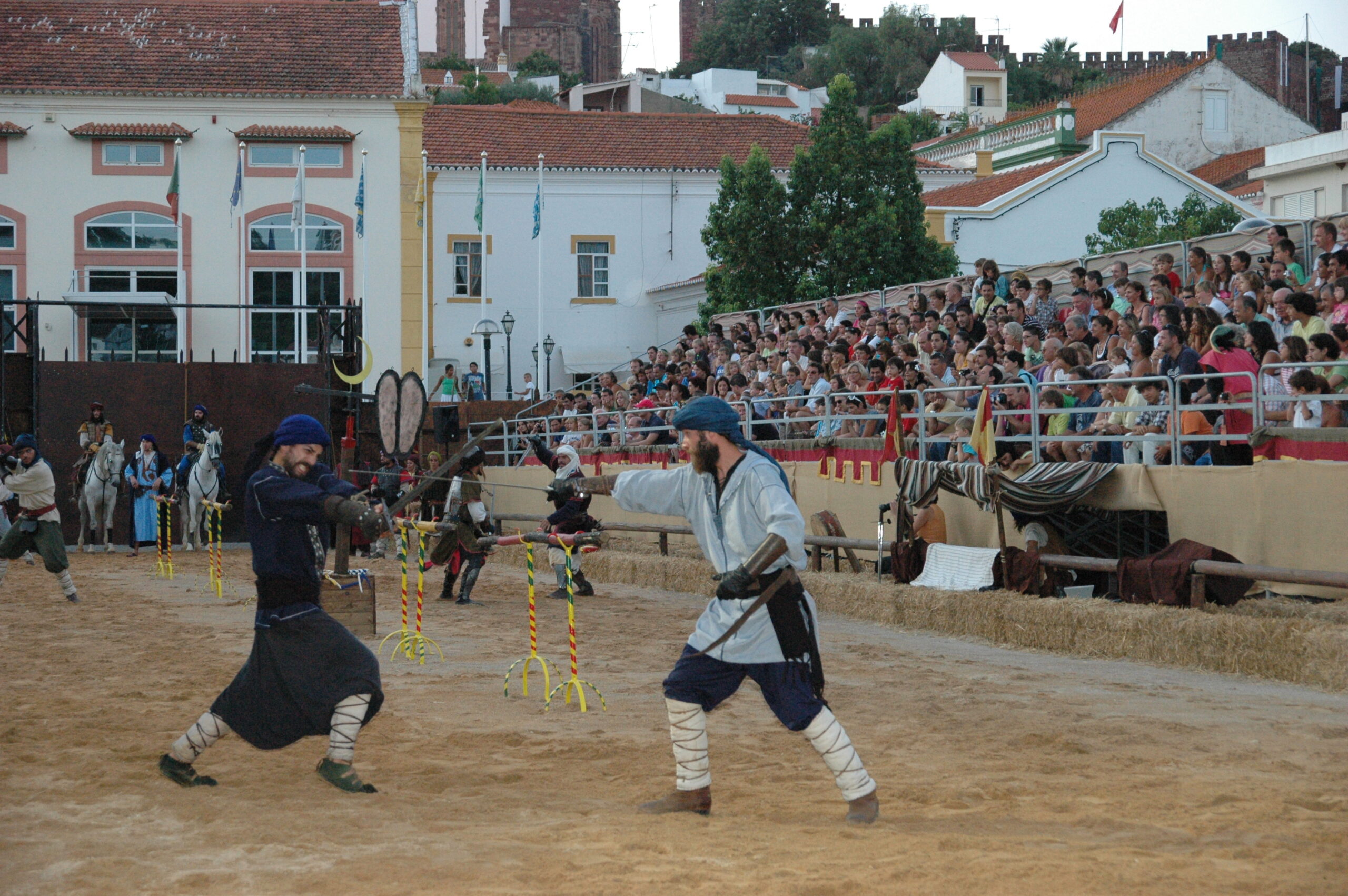
Medieval Tournament at the Silves Medieval Fair, 11 August 2011 © Municipio de Silves
(UN)DESIRABLE
Acronym
(UN)DESIRABLE
Project name
(UN)DESIRABLE: the repatriation of Portuguese emigrants from Rio de Janeiro, Paris and New York (1919-1939)
Call/ Funding
Reference
2023.07948.CEECIND
DOI
TBA
Summary
The (UN)DESIRABLE project examines the repatriation of Portuguese emigrants as a complex phenomenon requiring a multidisciplinary approach. Focusing on three key cities, Rio de Janeiro, Paris, and New York, Yvette Santos investigates how Portugal, a country of emigration, organized returns during the interwar period, which saw the rise of a more interventionist State and a tightening of migration restrictions, increasing the precariousness of emigrants.
The project studies the state rationale and the criteria used to select those considered “(un)desirable” for repatriation, based on economic utility. Drawing on public and private archives in four countries, an unprecedented comparison between transatlantic and European returns is sought, filling a historiographical gap in the study of undesirability within migration processes.
Principal Investigator
Yvette Santos, IHC – NOVA FCSH / IN2PAST
Medieval Tournament at the Silves Medieval Fair, 11 August 2011 © Municipio de Silves
Revhiscon
Acronym
Revhiscon
Project name
Revolution, towards the history of the concept. Analysing Portuguese parliamentary debates, 1821-2024
Call/ Funding
‘O 25 de Abril e a democracia portuguesa’ (“The ‘25 de Abril’ and Portuguese democracy”), launched by FCT and the Mission Structure for the Celebrations of the 50º Anniversary of the April 25th Revolution of 1974
Reference
2023.10725.25ABR
Summary
This project seeks to identify and analyse the occurrence and the different uses and meanings of the terms ‘revolução’/’revoluções’ in parliamentary debates from 1821 to 2024, thus contributing to a history of the concept in Portuguese political culture. “We share the understanding that discourses are both cause and effect of the historical processes in which they participate, and that language and the practices of conceptualisation and categorisation reflect and construct the reality to which they refer”, state the researchers in their application. The project is expected to run from September 2024 until March 2026.
Team
Principal Investigator
José Neves, IHC – NOVA FCSH / IN2PAST
Diego Palacios Cerezales, Universidad Complutense de Madrid (Co-PI)
Joana Dias Pereira, IHC – NOVA FCSH / IN2PAST
Daniel Alves, IHC – NOVA FCSH / IN2PAST
Rita Luís, IHC – NOVA FCSH / IN2PAST
José Miguel Ferreira, IHC – NOVA FCSH / IN2PAST
João Mineiro, CRIA – Iscte / IN2PAST
Paulo Silveira e Sousa, CHAM – NOVA FCSH
Ana Drago, CES – UC
Miguel Cardina, CES – UC
Goffredo Adinolfi, CIES – Iscte
Tiago Fernandes, CEI – Iscte
Bruno Damásio, NOVA IMS
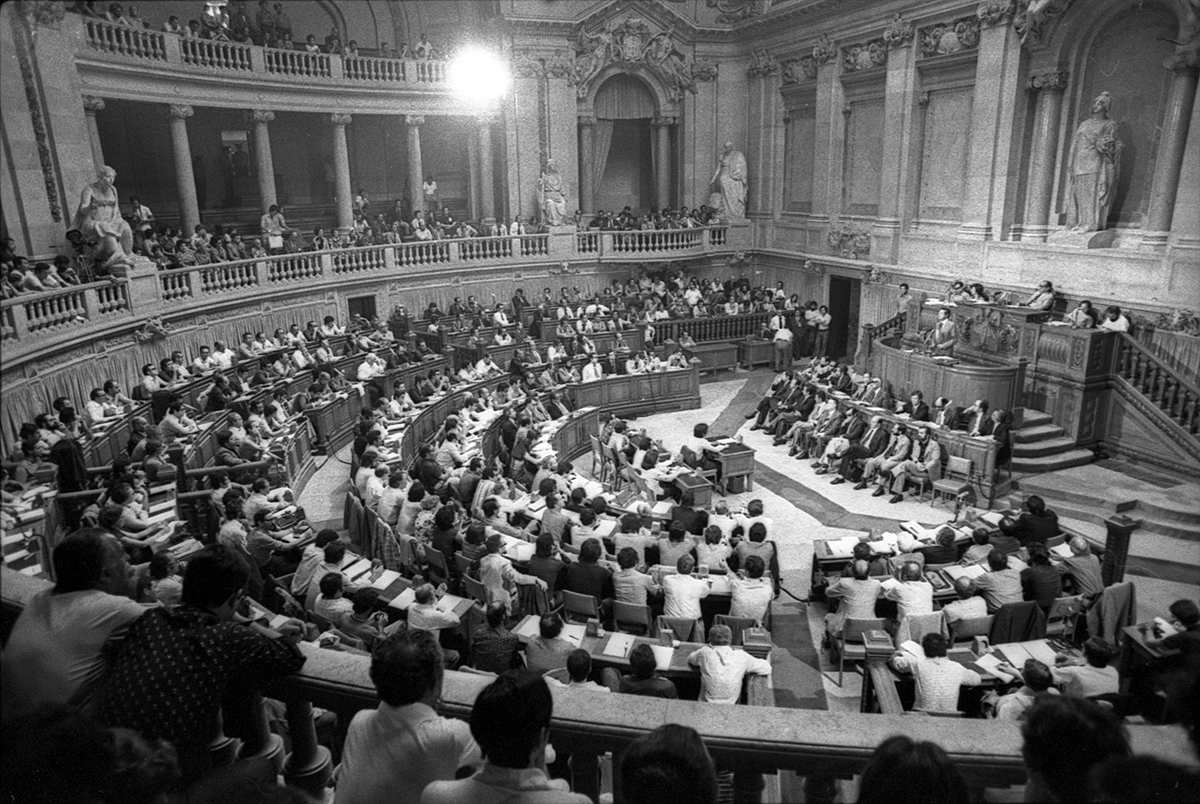
Sessions Room with the 1st Constitutional Government in 1976. The Government bench, removed during the Estado Novo, was restored, with Parliament assuming powers of supervision of government activity. © Miranda Castela | Arquivo Fotográfico da Assembleia da República
TRANSMAT
Acronym
TRANSMAT
Project name
Transnational Materialities (1850-1930): Reconstituting collections and connecting histories
Call/ Funding
FCT’s Call for R&D Projects in All Scientific Domains – 2020
Reference
PTDC/FER-HFC/2793/2020
Summary
Project TRANSMAT aims to contribute to the compilation and systematisation of academic data on the circulation of cultural goods and their cultural, social and political significance, focusing on archaeological collections associated with European and African geographic contexts, and ethnographic and colonial collections portraying those historically regarded as ‘contemporary primitives’. The focus will thus be on important transnational collections of the Museu Nacional de Arqueologia – National Museum of Archaeology (NMA) – in Lisbon and the Museu Municipal Santos Rocha – Santos Rocha Municipal Museum (SRMM) – in Figueira da Foz. The project ultimately seeks to produce knowledge about the history of such collections, the complex processes of their construction and the profiles and trajectories of the actors involved, identifying cultural/scientific practices and learning more about objects and their life-paths, that is, the multiple meanings over time in the various spaces in which they circulated.
Team
Principal Investigator
Elisabete Pereira, IHC – University of Évora / IN2PAST
Maria de Fátima Nunes, IHC – University of Évora / IN2PAST (Co-PI)
Alexandra Marques, IHC – University of Évora / IN2PAST
Ana Margarida Ferreira, SRMM
Ana Cardoso, SRMM
António Camões Gouveia, CHAM – NOVA FCSH
António Carvalho, NMA
Lorea Ariadna Ruiz Gómez, Universidad Complutense de Madrid
Carlos Batista, IHC – University of Évora / IN2PAST
Catarina Simões, CHAM – NOVA FCSH
Cristiana Bastos, ICS – ULisboa
Francisca Laevski, NOVA FCSH
Joana d’Oliva Monteiro, IHA – NOVA FCSH / IN2PAST
João Gabriel Caia, IHC – University of Évora / IN2PAST
Jorge Croce Rivera, CHAIA – University of Évora / IN2PAST
Liliana Caldeira, IHC – University of Évora / IN2PAST
Maria Figueira, IHC – University of Évora / IN2PAST
Marília Xavier Cury, USP
Mark Thurner, FLACSO
Patrícia Santos Batista, NMA
Quintino Lopes, IHC – University of Évora / IN2PAST
Raquel Vilaça, FLUC
Related News & Events
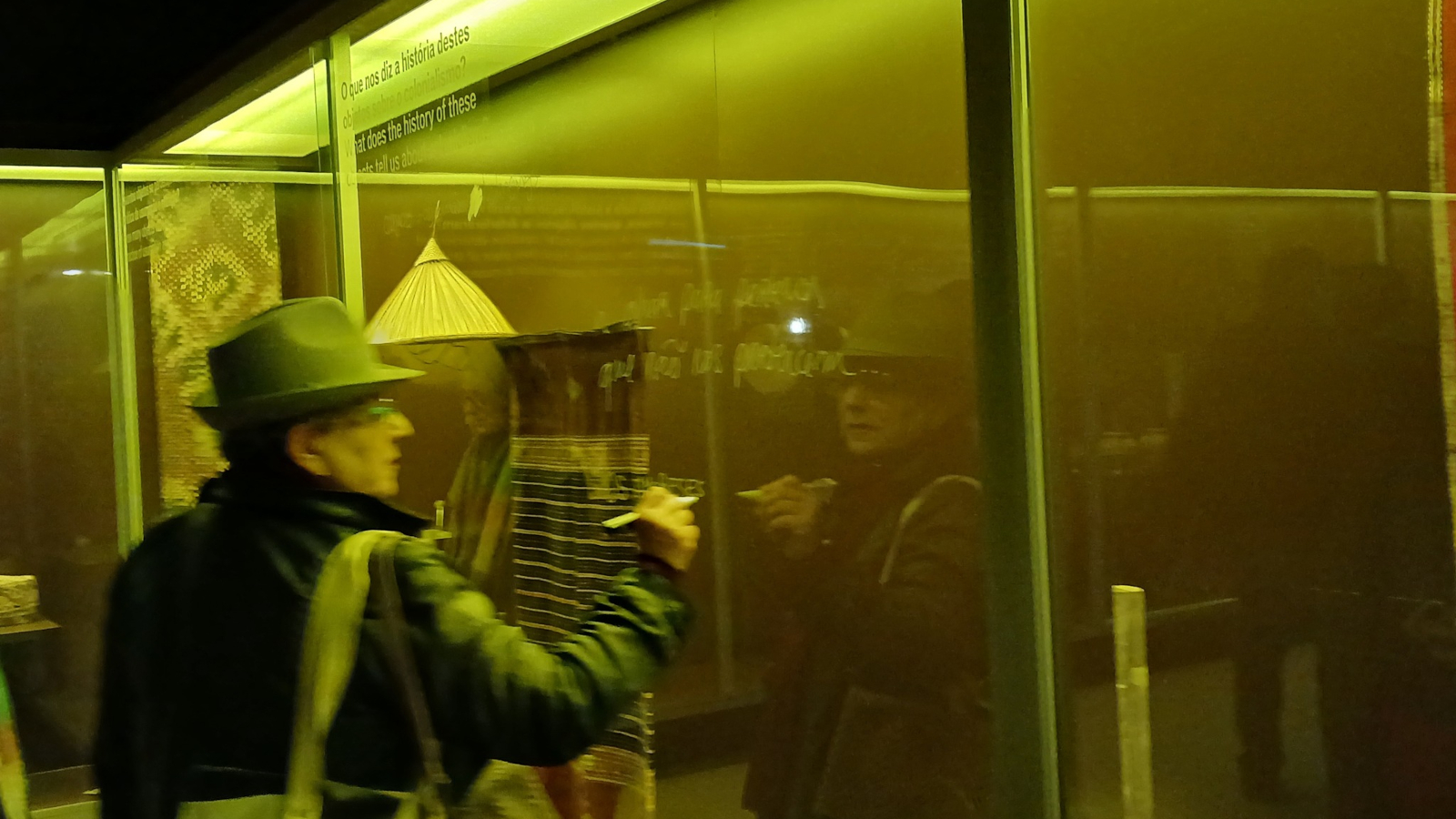
Opening of the exhibition ‘Facing Colonial Legacy in the Museum’, at the Santos Rocha Municipal Museum, March 12, 2025 © Manuelina Duarte