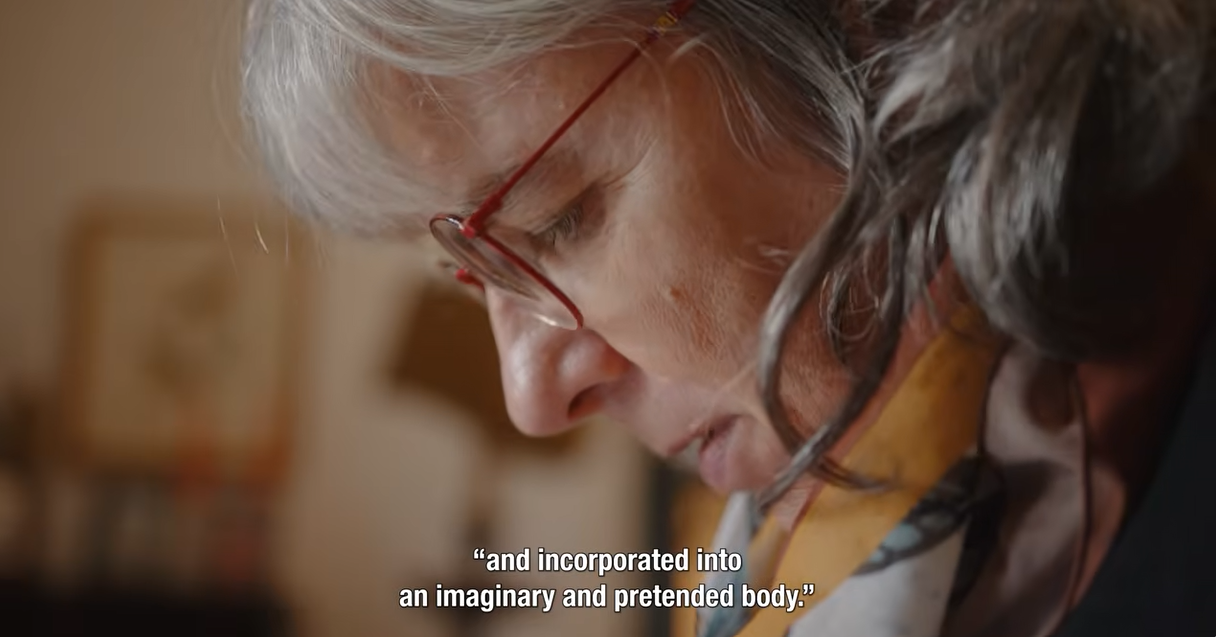
‘For five centuries, in the Iberian kingdoms, entails organised the whole of society around an idea and a legal figure that was to last into perpetuity.’ Thus starts the 35-minute documentary Project VINCULUM: a journey of scientific research, about the adventure of developing a research project, namely as a reference for other researchers wishing to apply for a grant awarded by the European Research Council (ERC).
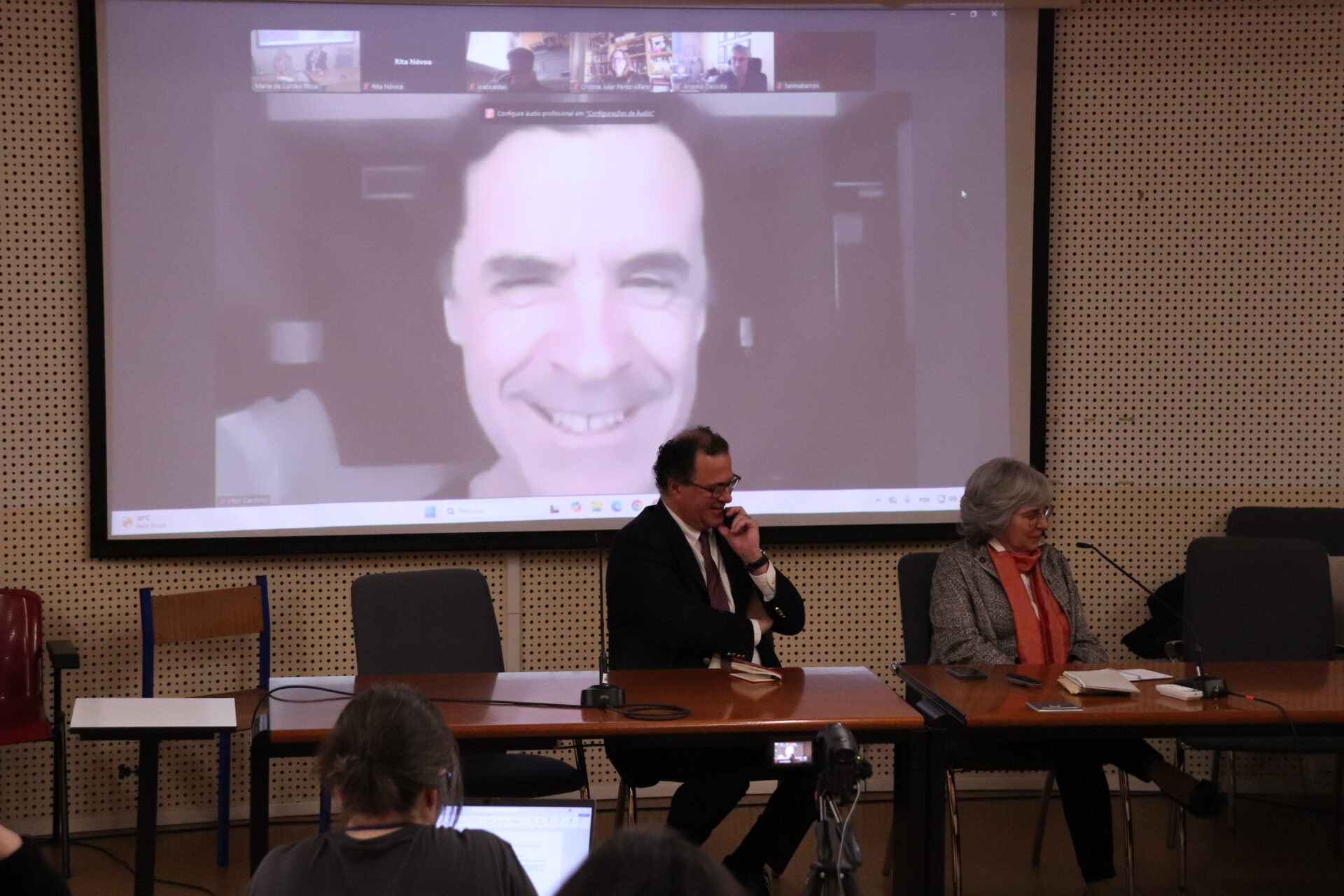
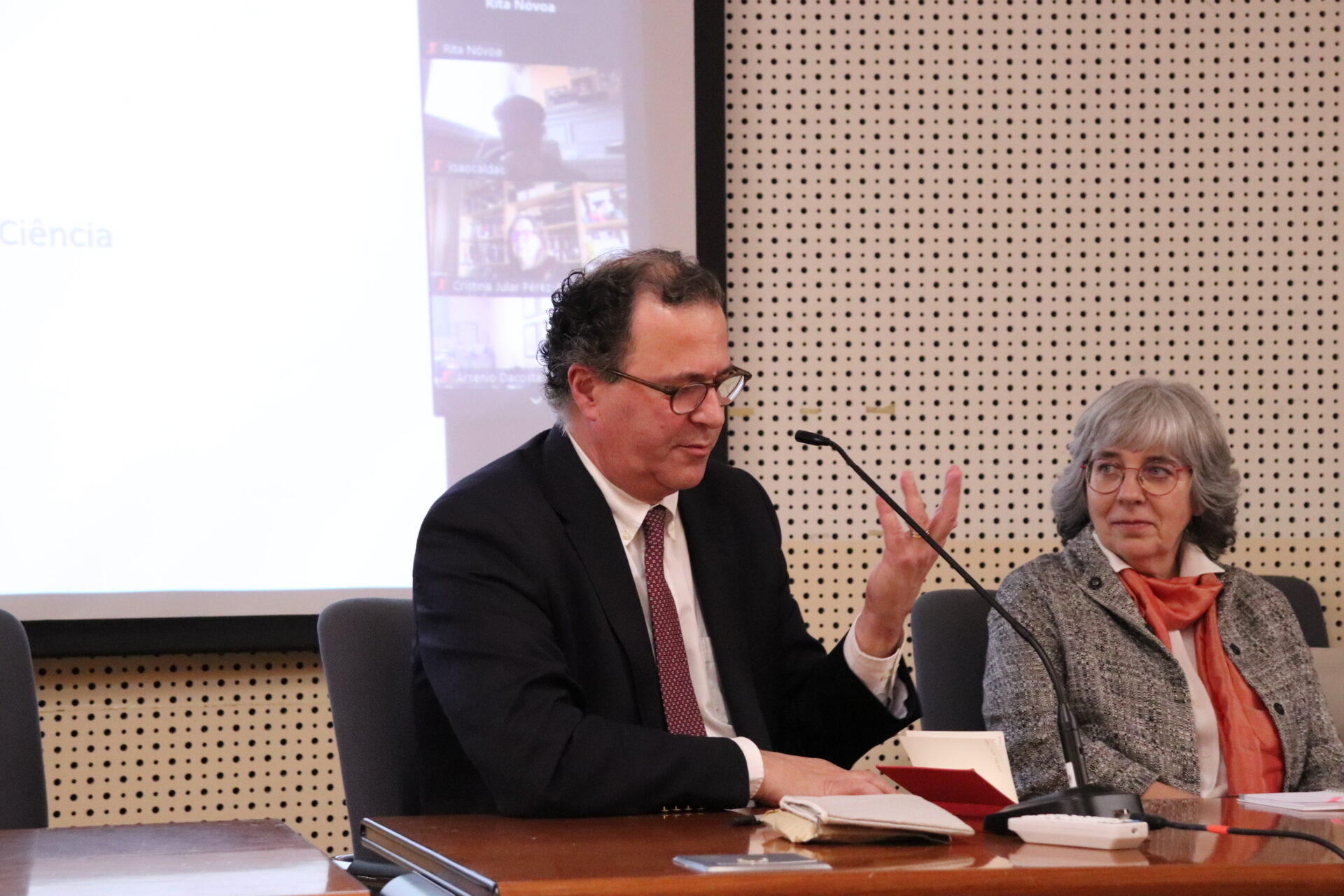
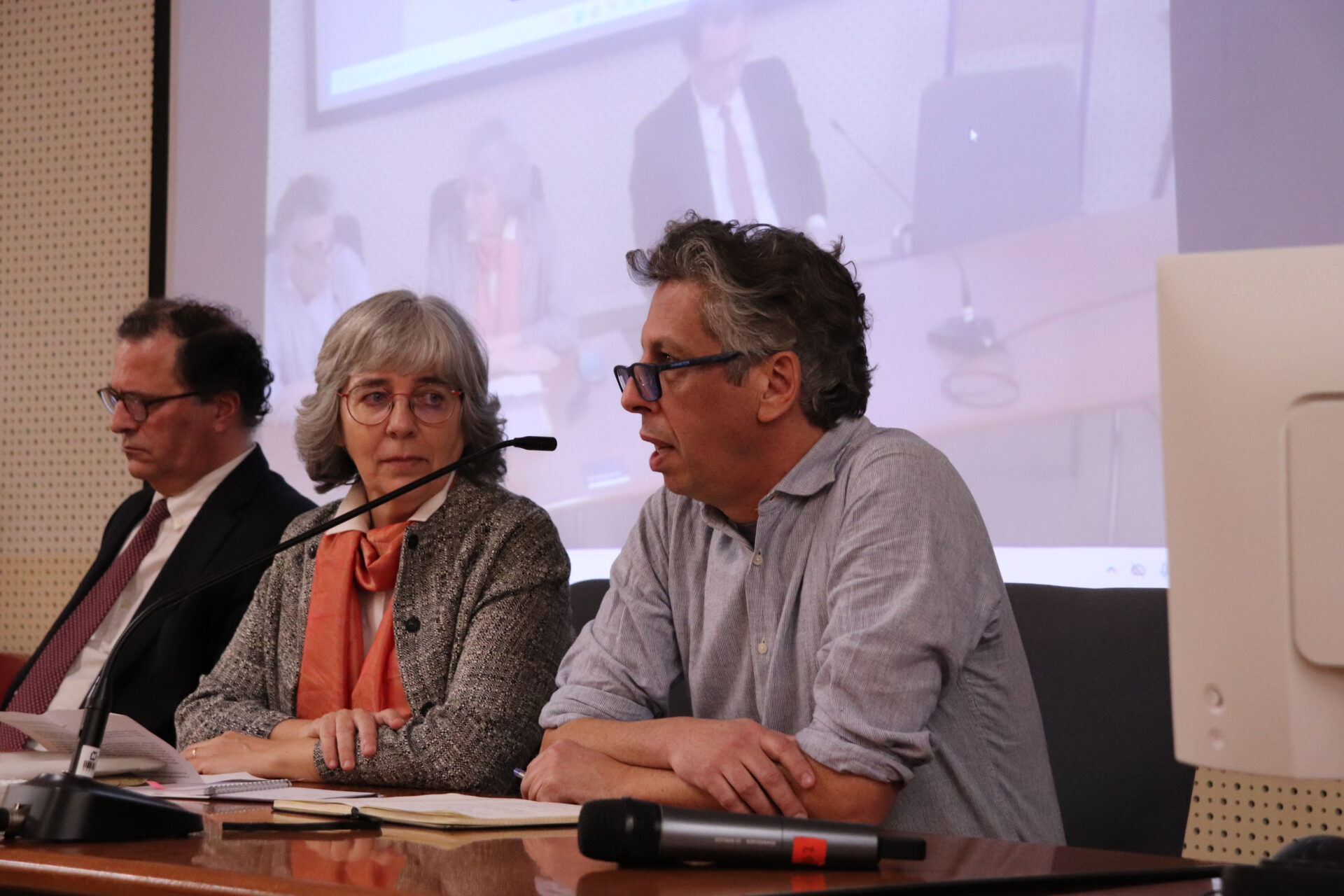
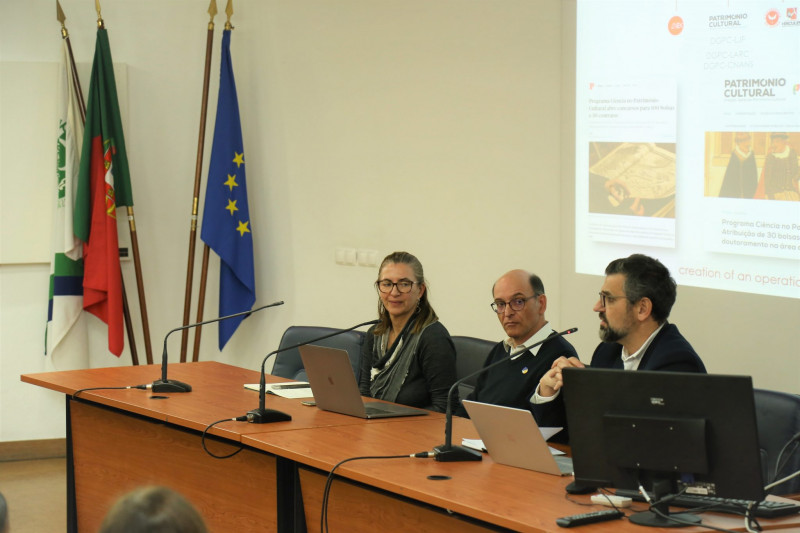
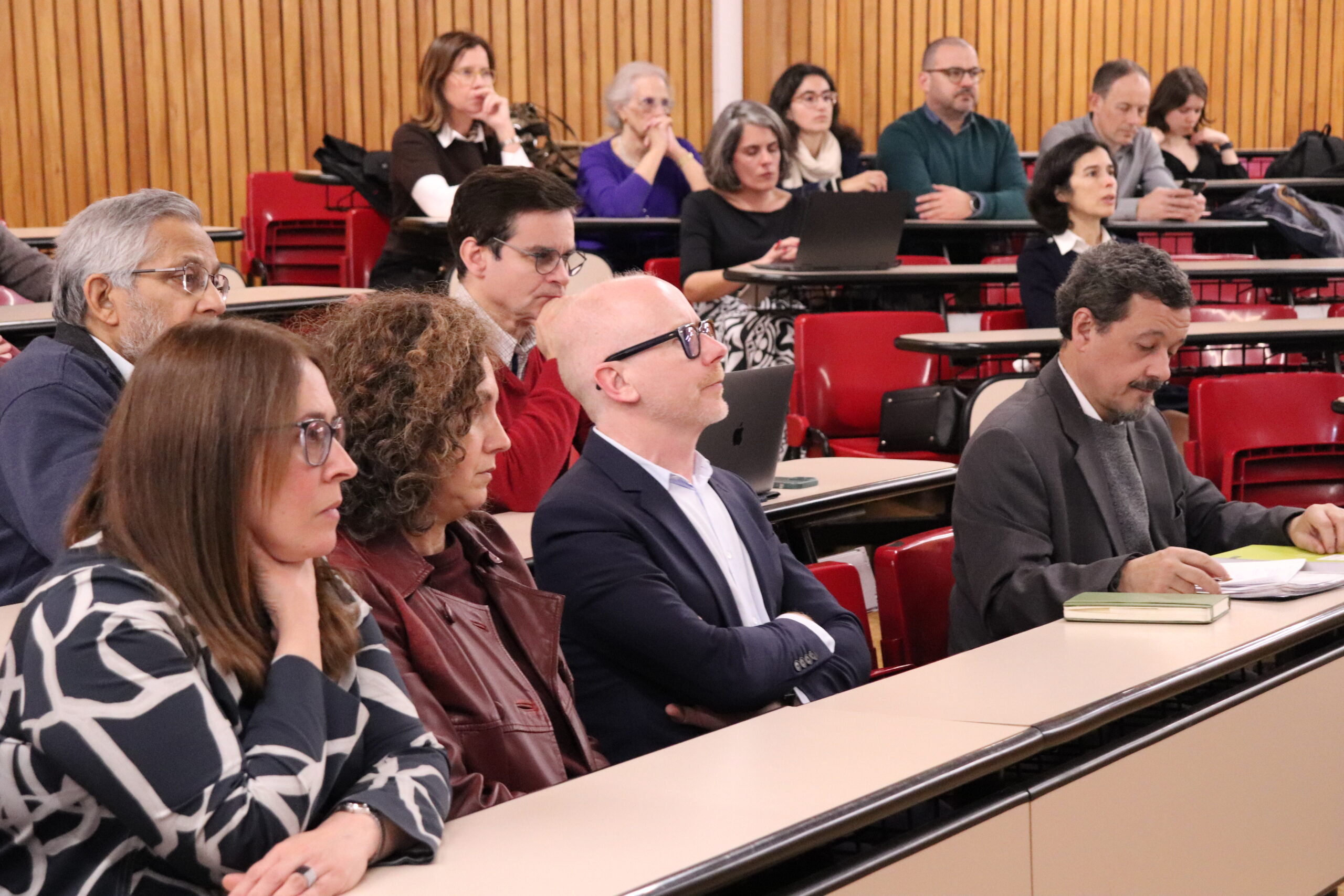
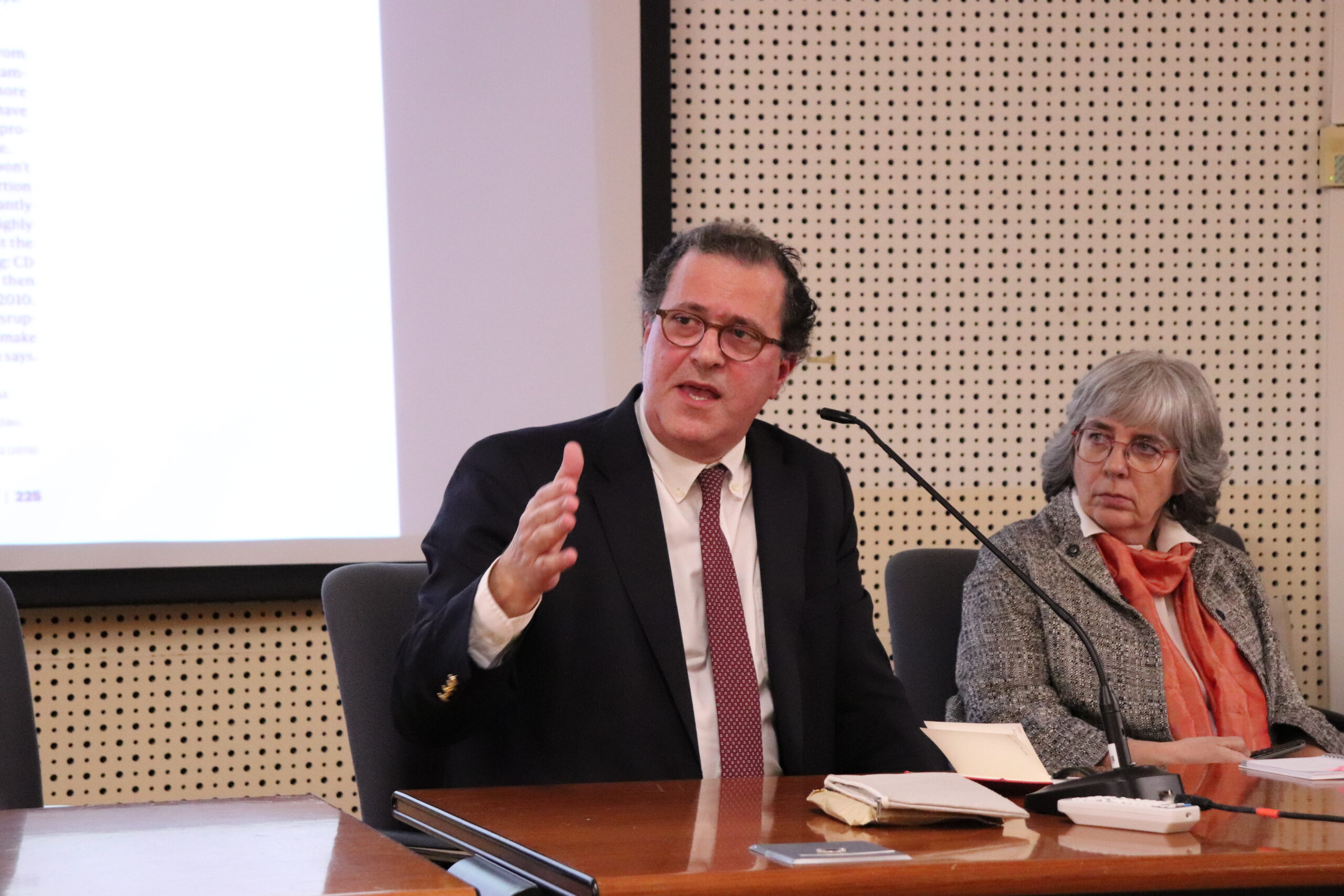
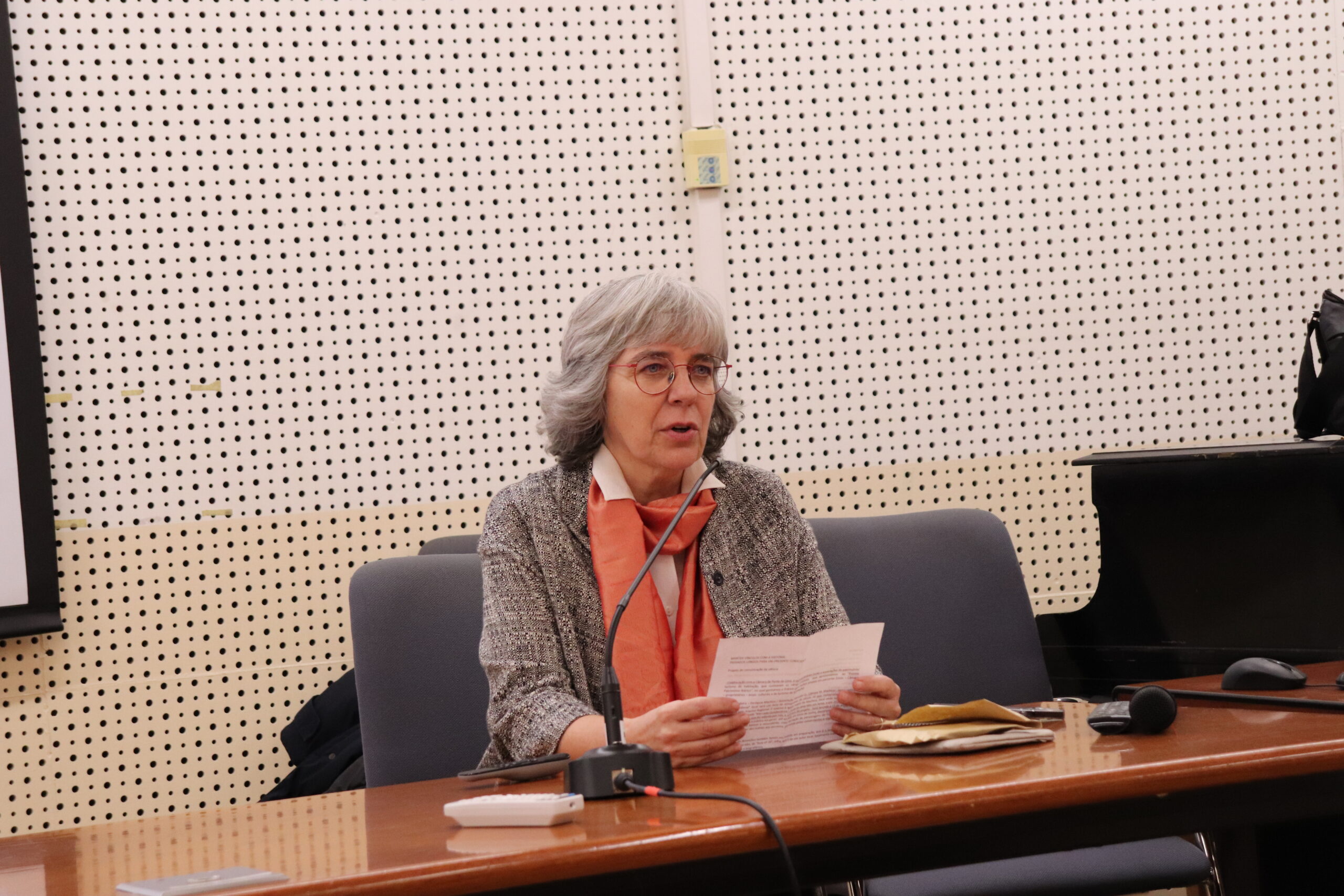
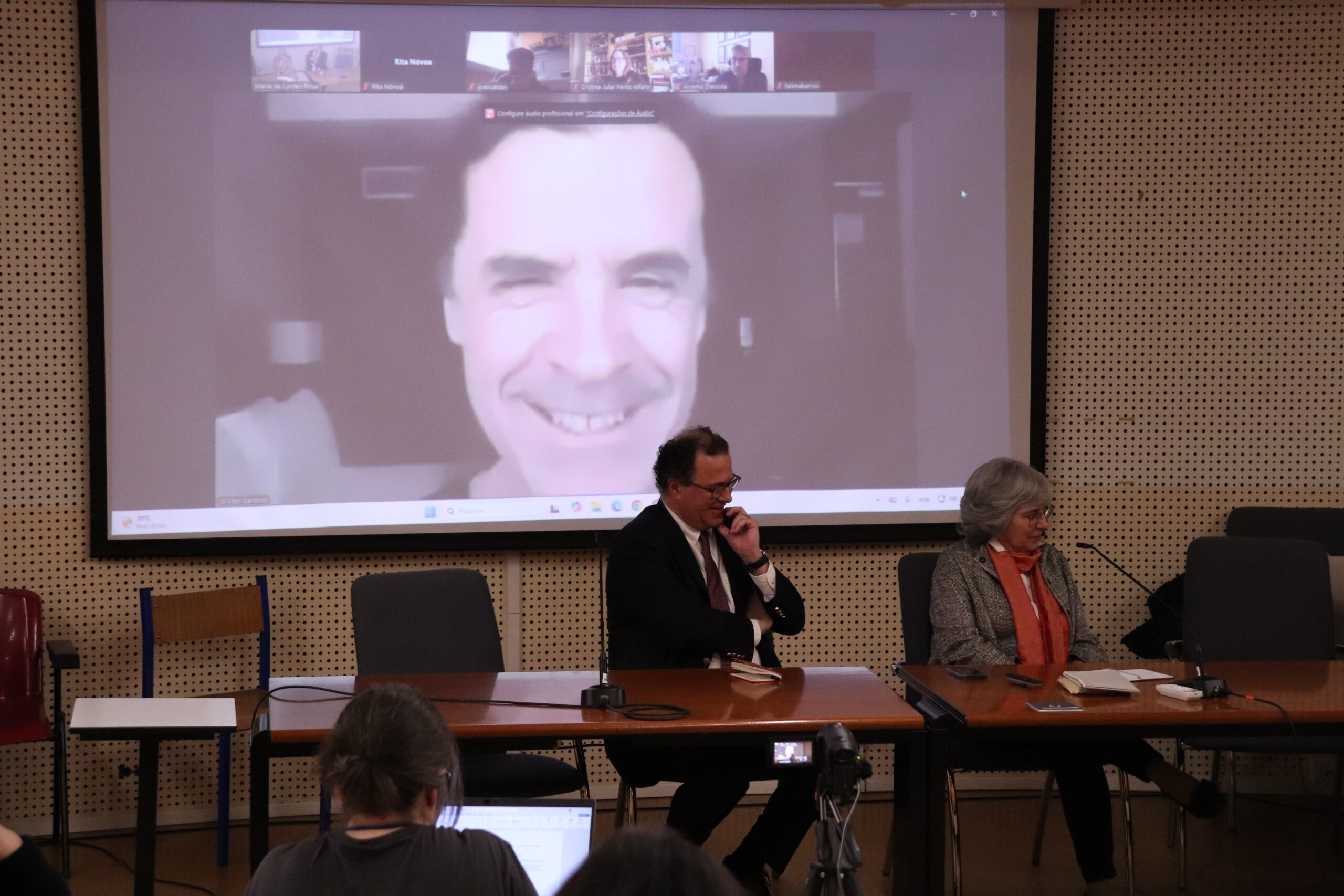
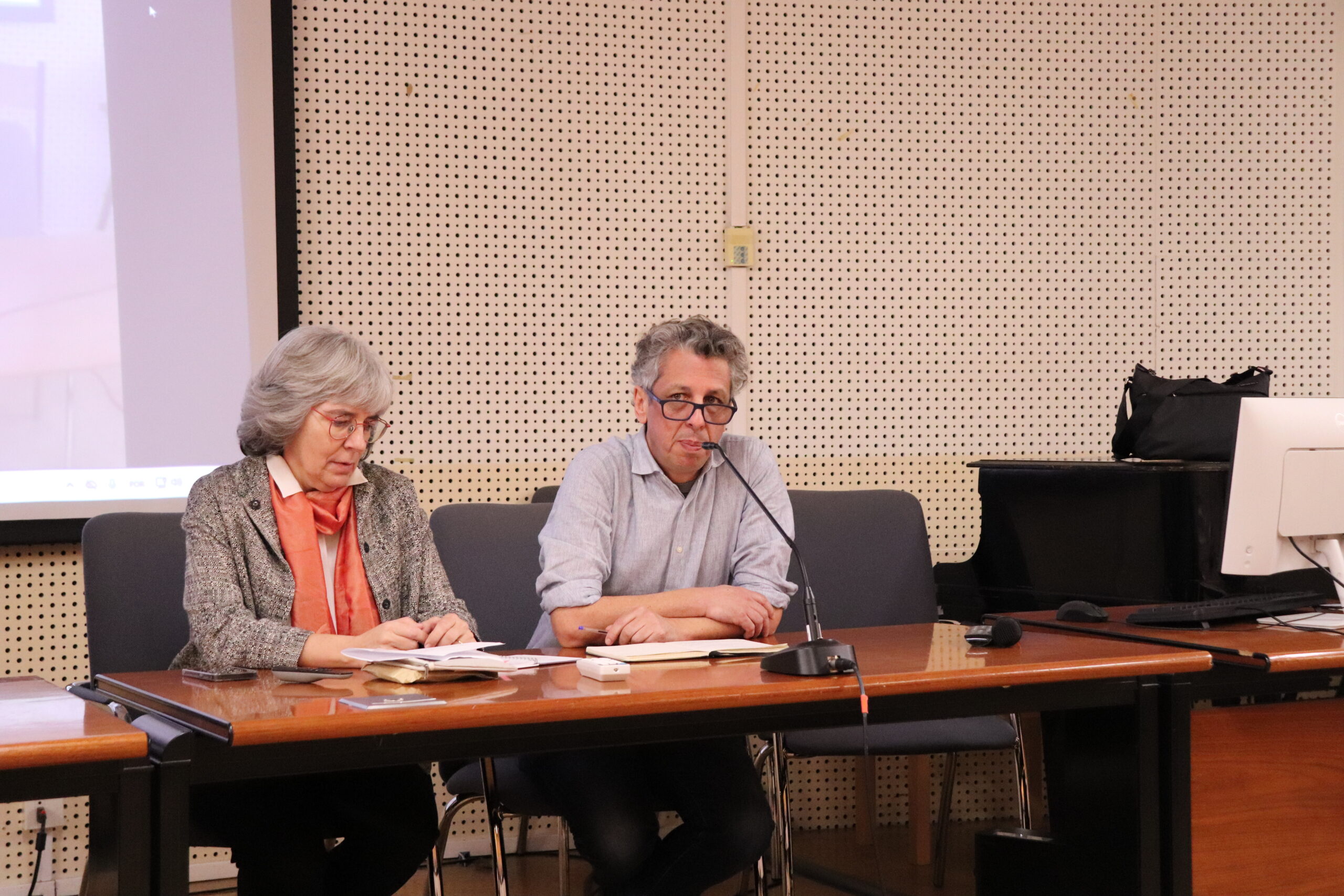
Recently released on YouTube, the film was premiered at the project’s closing session, on 23 February, at NOVA FCSH – School of Social and Human Sciences, in Lisbon, where ERC recipients Vítor Cardoso (IST, Center of Gravity) and Henrique Leitão (CIUHCT, FCUL) shared their views on what it means to be an ERC-grantee, and to set up, implement, conduct and bring to fruition an ERC-funded project.
Project VINCULUM analysed entails such as the morgadio, a legal form of heritage and property transmission that mainly benefitted the eldest male son and framed kinship, identity and power. In Iberian kingdoms, they were also key to the colonial appropriation of land.
A coffee at Mexicana
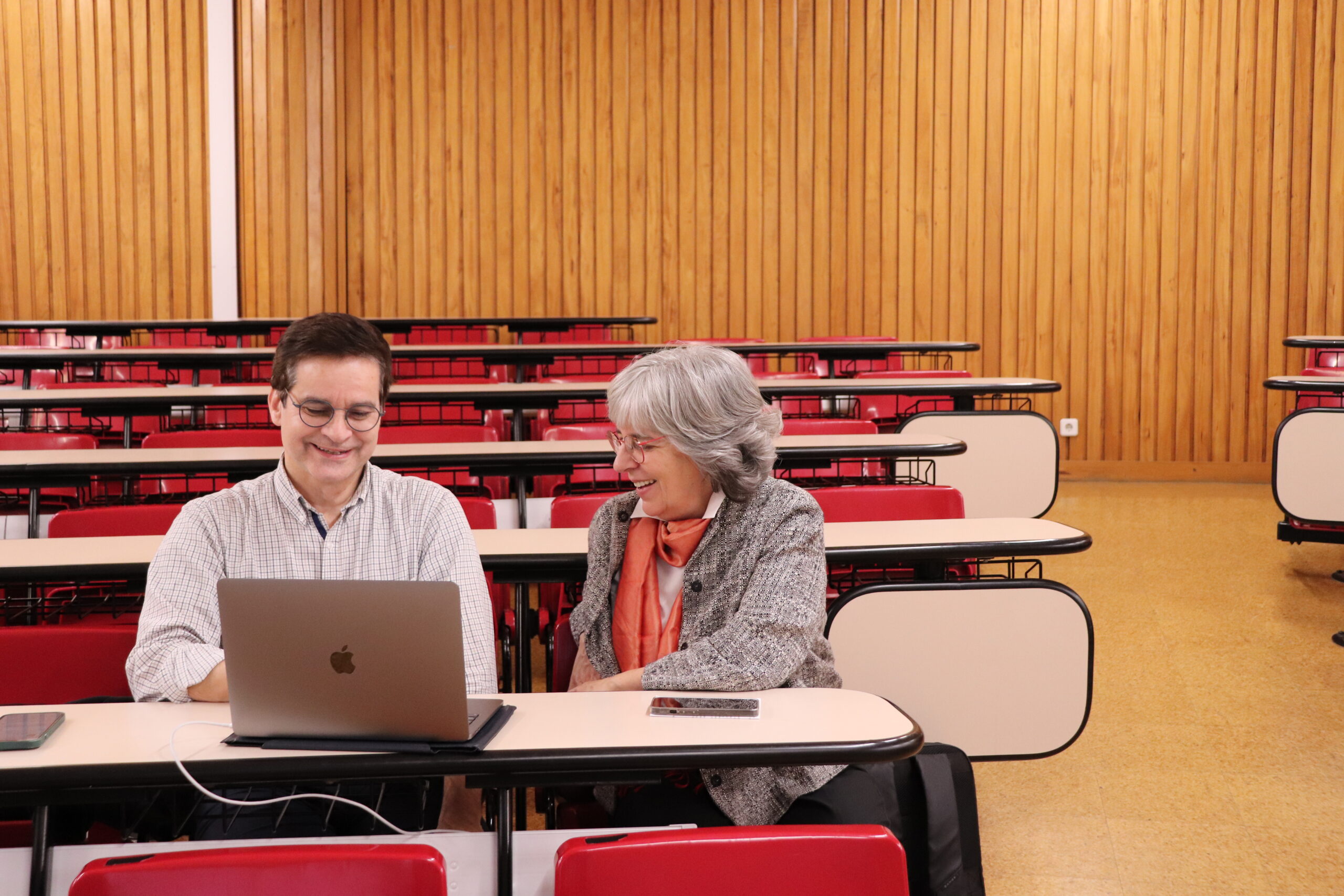
Although coming from different fields of research from that of historian Maria de Lurdes Rosa, VINCULUM’s principal investigator (PI), both Vítor and Henrique were references and sources of support for the IHC – NOVA FCSH / IN2PAST researcher. ‘On a scientific level, everything unites us’, shared theoretical physicist Vítor Cardoso, joining the session live from Barcelona.
Mentioning his first get-together with Lurdes, at the historic pastry shop Mexicana, in Lisbon, the black holes specialist suggested that curiosity and vision are their common ground, specifying that Human Sciences allow us to understand human laws and behaviour just as Physics allows us to perceive the laws of the Universe.
Part of this shared vision lies on ‘wanting to do good, and leave a legacy beyond the project’, says Vitor – ‘a legacy that is less tangible, more sublime, more lasting’. For the director of the Center of Gravity (Niels Bohr Institute, Denmark), ERC grants are a privilege because ‘the limits are ours/we are the limits’. And ‘Lurdes Rosa and her team went beyond the limits of normality’, he praised, while warning ‘any one of us runs the risk of being awarded an ERC’.
Disruptive science and institutional change
Paying tribute to a project he followed from afar, physicist and science historian Henrique Leitão, shared his vision and experience of the ERC funding system, namely on the reasons for its success in leveraging not only disruptive science but also institutional transformation.
And although ERC awards more grants (and money) in Physics-Engineering, and Life Sciences than in the Humanities, Henrique points out the specific case of Portugal, with a higher approval rate in the Humanities than in Physics-Engineering, showing the field’s competitiveness, and the potential for, ‘little by little’, some institutional change, he says.
The influence an ERC-funded project can have was highlighted by IHC director Luís Trindade, who stated that ‘VINCULUM’s transition to IHC had a huge impact on the life of the Institute of Contemporary History and of Associate Lab IN2PAST’. Originally hosted at the Institute for Medieval Studies (IEM, in the Portuguese acronym), the project led both IHC and IN2PAST to focus more on the importance of archives in historiography, and probably to rethink the chronology of contemporaneity.
Why study entails?
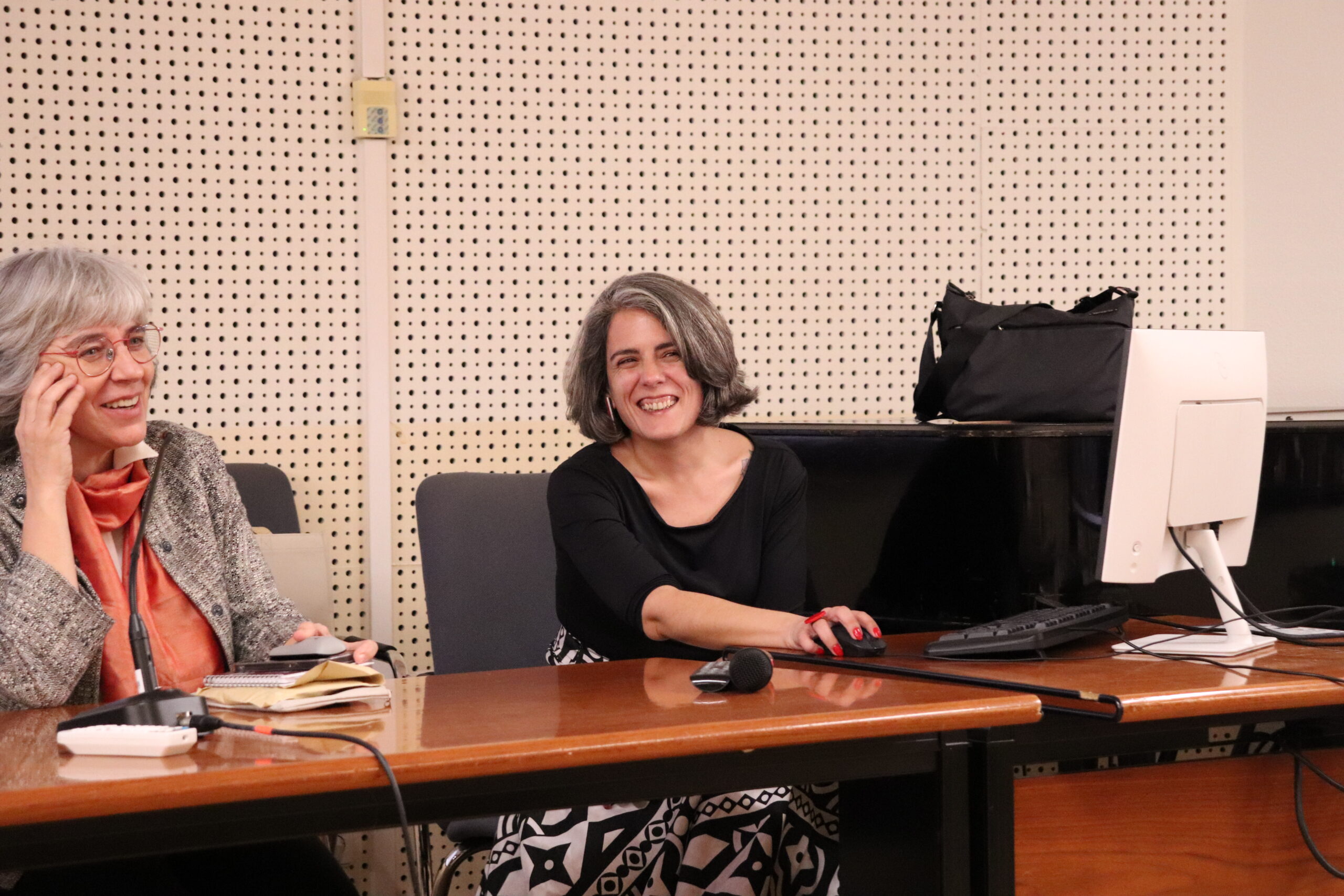
‘Being at the IHC was very important, as we were forced to constantly explain the project’, remarked project PI Lurdes Rosa. ‘For a correct and complex understanding of the present, we cannot limit ourselves to the recent past, ‘most similar’ to the present, in terms of social model’, argues the IHC / IN2PAST researcher.
‘The alterity [otherness] of Old Regime societies, in terms of their organisation and logic, must be understood and studied outside the notion of historical progress, using appropriate analytical forms such as historical anthropology’, she adds.
For the benefit of society
In addition to the release of the documentary, directed by João Esteves and co-produced by team member Rita Sampaio da Nóvoa (IHC – NOVA FCSH / IN2PAST), the team will carry forward a series of ongoing activities, resulting mainly from the impact of the project’s science communication initiatives.
These include partnerships with the Municipalities of Machico (in Madeira Island), Arronches (border town in Alto Alentejo) and Barcelos (Minho, North of Portugal); an application to the European Heritage Awards / Europa Nostra Awards; transforming the ‘Discovering the historic houses of Ribeira Lima’ initiative, which won the Património Ibérico 2025 award (Best Partnership Project), into a brand to propose to Municipalities; working with local associations and historic houses/archives owners to prepare applications to funding projects.
The idea is also to frame these actions within some kind of ‘association’ or working group dedicated to the ‘study and appreciation of historic houses and their archives’, says Lurdes Rosa, who is also planning an application to the ERC Proof of Concept Grant in September, and to the ERC Advanced Grant in 2027, with projects regarding the history of these houses and their archives.