The CLIMACT-CH team, a bilateral research project bringing together IN2PAST/UÉvora and Casa de Oswaldo Cruz/Fiocruz, is already in contact with the Archaeology, Heritage and Museums Sector of the Alcácer do Sal Municipality, offering their support to the survey record of impacts on cultural heritage, and to work with authorities and the community to develop adaptation and preparedness strategies for future events.
The cultural heritage of Rio Sado (Alcácer do Sal/Grândola, in the Coastal Alentejo sub-region) is one of four sites selected in Brazil and Portugal for the implementation of a climate risk management system for tangible and intangible heritage, to be developed together with local communities. In the wake of storms Kristin and Leonardo that ravaged Portugal, dozens of monuments, museums, churches, and sites were also affected across the country, causing significant damage. In Alcácer do Sal, the Carrasqueira stilt pier, a masterpiece of popular architecture, was partially destroyed.
Project CLIMACT-CH – Impacts of climate change on tangible and intangible cultural heritage: a Brazil-Portugal study (FIOCRUZ/0004/2025) was one of the applications approved under the Casa de Oswaldo Cruz International Research Excellence Programme (PROEP-INTER 2025), through the 2025 Call for scientific cooperation between Brazil and Portugal, launched by Fundação para a Ciência e a Tecnologia (FCT), the Portuguese public science funding agency, and by the National Council for Scientific and Technological Development (CNPq) and the Oswaldo Cruz Foundation (Fiocruz), through Casa de Oswaldo Cruz (COC), in Brazil.
The objective of this project, aligned with call’s theme ‘Memory as a Right’, is to monitor and assess the impacts of climate change on the tangible and intangible heritage of four case studies located in both countries. These sites were selected due to their recognised cultural value to society and their vulnerability to multiple risks likely to compromise tangible and intangible values.
The selected sites are: the historic complex of the Oswaldo Cruz Foundation, the mixed site of Paraty and Ilha Grande (both in the state of Rio de Janeiro), Colégio do Espírito Santo in Évora; and the cultural heritage of the River Sado (Alcácer do Sal/Grândola). The adopted approach consists of implementing a risk management cycle, supported by a large multi- and interdisciplinary team, in close coordination with the associated cultural communities, which shall participate in the reconnaissance, identification and assessment of existing risk factors, as well as in the definition of mitigation and adaptation strategies.
The relevance of this project in the context of IN2PAST lies in its strong citizen science component, with the active involvement of local communities throughout the process, assuming their role as direct sources of intangible values, know-how and traditions associated with the memory, practices, and cultural and environmental identity of these sites. CLIMACT-CH is also expected to contribute to the definition of environmental public policies and risk management strategies that effectively integrate the voices and knowledge of communities.
In the face of increasingly extreme weather conditions, tangible and intangible heritage is at risk, particularly in case studies located in coastal areas. Combining scientific research with climate justice, this project aims to collect data that will enable the mapping, monitoring and projection of the effects of climate change in these territories, as well as to understand how these impacts affect the way of life of local communities. At the same time, CLIMACT-CH will seek to identify solutions and build possible futures that do not erase the past, but draw on it to design fairer, more sustainable and pluralistic ways of inhabiting the planet.
Coordinating institutions for this project are the Oswaldo Cruz Foundation, through Casa de Oswaldo Cruz, with Carla Coelho as principal investigator (PI), and the University of Évora, through IN2PAST, with António Candeias as PI and Teresa Reis as co-PI, both from HERCULES Laboratory – UÉvora
The project involves researchers from other institutions, including, on the Brazilian side, the Ministry of Culture, the National Institute of Historical and Artistic Heritage, the State University of Campinas, the UNA University Centre (Minas Gerais), the Federal University of Juiz de Fora and the Federal University of Mato Grosso do Sul; and, on the Portuguese side, _ARTERIA_Lab, the Institute of Earth Sciences (ICT) and the Centre for Research in Science and Technology for the Earth and Energy System (CREATE) at the University of Évora; Iscte-IUL and the Municipality of Alcácer do Sal.
Other IN2PAST researchers are also part of the team, namely Ruy Llera Blanes (CRIA – Iscte), Natália Melo (IHC – UÉvora) and, from HERCULES – UÉvora, Ana Teresa Caldeira, Carlo Bottaini, Cátia Salvador, Fabio Sitzia, José Mirão, Leonel Alegre, Mathilda Coutinho, Rosário Martins, Sara Valadas and Sílvia Arantes.
With allocated funding of €124,615, CLIMACT-CH formally kicked-off in January 2026 and will predictably run for three years. In this start-up phase, the teams are in the process of coordination and consolidation, familiarising themselves with the work plan and developing implementation strategies tailored to the different territories. More information and preliminary results will be released shortly.
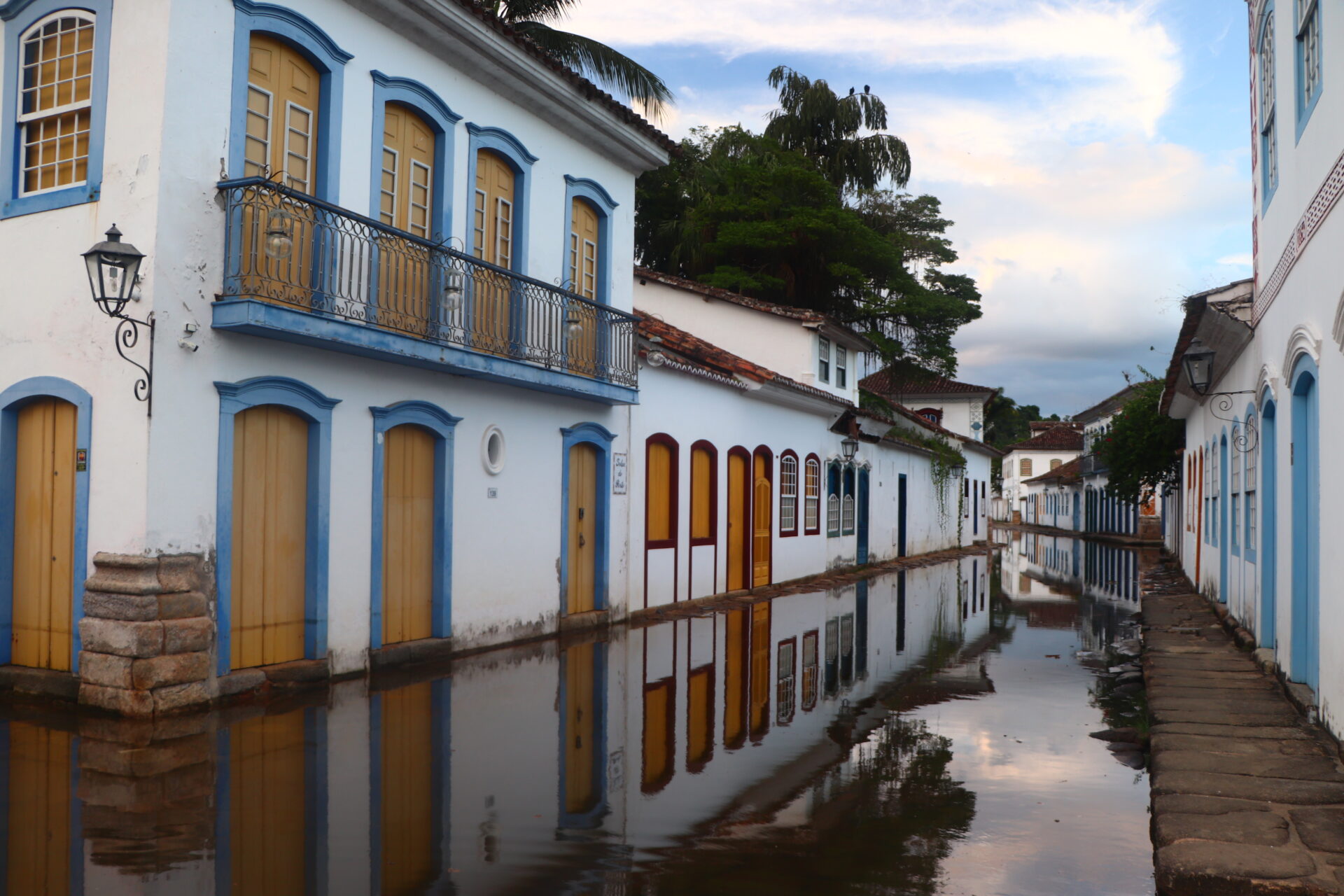
Historical center of Paraty, Rio de Janeiro state, Brazil © Filipo Tardim, under license CC-BY-SA-4.0
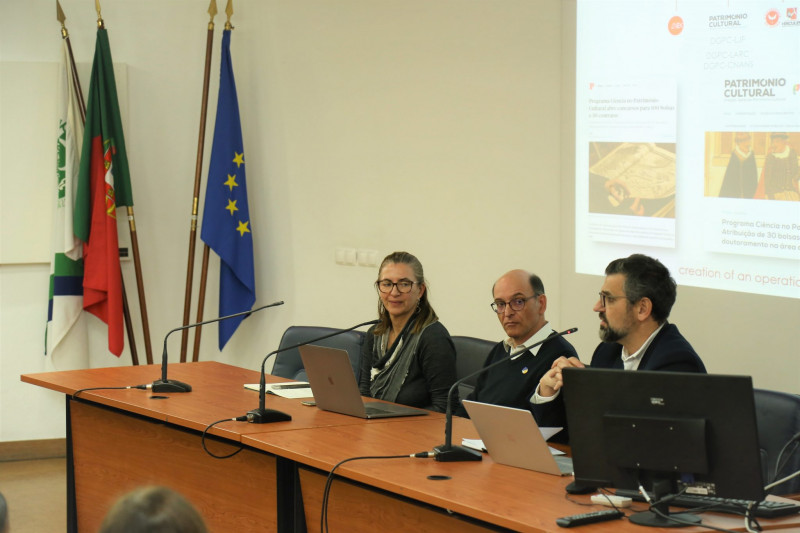
IMAGE From left to right: Assistant Deputy Director for Research Cristina Brito; Manuel Pedro Ferreira, from CESEM; and António Candeias, from HERCULES
© NOVA FCSH