
Organised by the International Federation for Public History (IFPH), the 8th International Conference on Public History takes place in Lisbon, Portugal, for the first time, from September 7 to 11, 2026. IFPH 2026 Lisbon will be hosted by IN2PAST – the Associate Laboratory for Research and Innovation in Heritage, Arts, Sustainability and Territory, a transdisciplinary consortium of seven research centres, at Colégio Almada Negreiros on the Campolide campus of Universidade NOVA de Lisboa.
Dedicated to ‘The Public History of Difficult Pasts’, the IFPH’s 8th Conference seeks to challenge historical revisionism, amplify marginalised voices, and foster transnational dialogues on reconciliation, accountability, and restorative justice, inviting contributions that explore one of more than 25 subtopics on the themes of Historical Contexts and Global Processes, Contemporary Challenges and Methodological Innovations, Voices and Perspectives, and Justice and Reconciliation.
The call for papers ran from September 30 until November 30, 2025 and was highly participated. See below the conference overview and practical information regarding other important dates, location & venue, transportation, accommodation and restaurants near the conference venue.
IN2PAST is represented on IFPH’s Steering Committee by IHC – NOVA FCSH researcher Joana Dias Pereira.
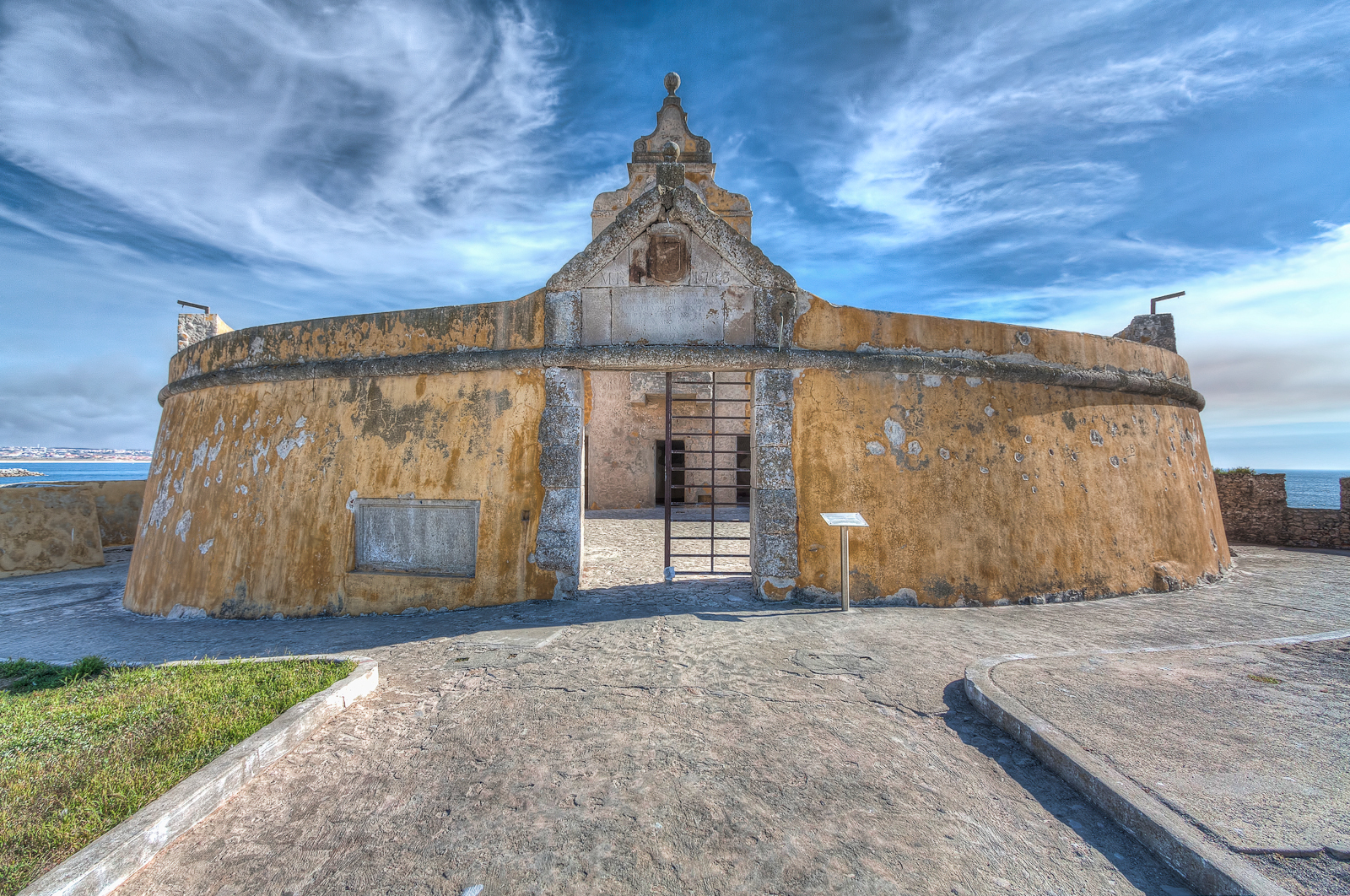
Photograph: Peniche Fortress, Fortim Redondo, site of the infamous ‘Segredo’ (isolation cells) © Paulo – Flickr (CC BY-NC-ND 2.0)
The 8th International Conference on Public History, organised by the International Federation for Public History, IFPH, will take place in Lisbon from September 7 to 11, 2026. It will be hosted by IN2PAST – the Associate Laboratory for Research and Innovation in Heritage, Arts, Sustainability and Territory, a transdisciplinary consortium of seven research centres, at Colégio Almada Negreiros on the Campolide campus of Universidade NOVA de Lisboa.
In a time of escalating attacks by right-wing movements on memory, diversity, human rights, democracy, and history itself, the International Federation for Public History (IFPH) reaffirms its commitment to fostering critical engagement with the ways societies confront, interpret, and relate to their difficult pasts and challenging presents. The IFPH strongly condemns book banning, the censorship of historical narratives, the surveillance of students and educators, the targeting of sites of remembrance, and the imposition of ideological agendas — particularly right-wing distortions — that not only threaten academic freedom but undermine the very principles upon which public history is built. Against this backdrop, the conference seeks to challenge historical revisionism and silencing, to amplify marginalised voices and memories, and to promote transnational dialogues on reconciliation, accountability, and restorative justice.
Public History has long addressed global historical processes such as colonialism, the transatlantic slave trade, and the genocide of Indigenous peoples, as well as phenomena that emerge in multiple contexts, including armed conflicts and dictatorships. It embodies both a political and ethical commitment to examining how difficult pasts have been lived and remembered by different communities and individuals, ensuring that their perspectives are acknowledged and respected. At the same time, engaging with these histories through Public History raises significant challenges. Sharing authority with specific communities and amplifying marginalised narratives may unintentionally silence other voices, while also presenting complex ethical dilemmas.
Furthermore, Public History operates within the public sphere, engaging diverse audiences and navigating competing representations of the past in an era increasingly marked by the political instrumentalisation of history and the spread ofrevisionist and denialist discourses.
1. Calendar
2. Location & Venue
The 8th International Conference on Public History will take place at Colégio Almada Negreiros (CAN), located just above Parque Eduardo VII in central Lisbon.
The campus is easily accessible by Metro (underground) – São Sebastião or Praça de Espanha stations –, bus, or on foot from hotels in the city centre, and offers an on-site cafeteria for snacks and light meals, as well as a cantina serving hot meals.
Venue: Colégio Almada Negreiros (CAN), Lisbon
Rua da Mesquita (better for those coming by bus and train)
Travessa Estêvão Pinto (better for those coming by undergound)
3. Transportation
How to get to Colégio Almada Negreiros:
By plane
Humberto Delgado Airport is only about 7 km away from the centre of Lisbon, Colégio Almada Negreiros (CAN) and the nearby hotels.
By underground
You can access all the underground (Metro) maps here. It has stops near Colégio Almada Negreiros (CAN): São Sebastião in the Blue and Red Lines, and Praça de Espanha in the Blue Line.
By train
Get off at the station Gare do Oriente, Santa Apolónia, Roma-Areeiro, Entrecampos, Sete Rios or Rossio, from where you can take the underground (Metro) to São Sebastião or Praça de Espanha, near Colégio Almada Negreiros (CAN). You can access all the train networks here.
By bus
The closest bus stop to Colégio Almada Negreiros (CAN) is at the stop Rua de Campolide (Escola). You can access the CARRIS busses schedule and lines here.
By car
You can travel anywhere in Lisbon by taxi or using a hired vehicle service such as Uber or Bolt.
4. Accomodation
There are various options to consider when planning your stay in Lisbon. The following is a list of hotels near Colégio Almada Negreiros (CAN):
5. Restaurants
There are various options to consider regarding restaurants or bars. The following is a list of restaurants near Colégio Almada Negreiros (CAN):
Cristina Pratas Cruzeiro (IHA – NOVA FCSH)
Giulia Strippoli (IHC – NOVA FCSH)
Joana Dias Pereira (IHC – NOVA FCSH)
Joana Miguel Almeida (CRIA – NOVA FCSH)
Marta Prista (CRIA – NOVA FCSH)
Patrícia Roque Martins (IHA – NOVA FCSH)
Sónia Vespeira de Almeida (CRIA – NOVA FCSH)
2026 – new President of the IFPH
Afonso Dias Ramos (IHA – NOVA FCSH / IN2PAST)
Clarissa Ceglio (UConn Humanities Institute)
Cristina Pratas Cruzeiro (IHA – NOVA FCSH / IN2PAST)
David Dean (Carleton University, former member of the IFPH SC)
Giulia Strippoli (IHC – NOVA FCSH / IN2PAST)
Gonçalo de Carvalho Amaro (National Museum of Ethnology, Portugal)
Greg Smoak, (University of Utah, USA)
Helena Elias (Faculty of Fine Arts of the University of Lisbon)
Irmgard Zuendorf (IFPH) (Leibniz Centre for Contemporary History, Potsdam, Germany)
Jimena Perry (IFPH) (Iona University, USA)
Joana Dias Pereira (IHC – NOVA FCSH / IN2PAST)
Joana Miguel Almeida (CRIA – NOVA FCSH / IN2PAST)
Joanna Wojdon – Co-Chair (IFPH) (University of Wrocław, Poland)
João Mineiro (CRIA – Iscte / IN2PAST)
Lindsey Walden (North Carolina State University)
Manuel Loff (IHC – NOVA FCSH / IN2PAST)
Maria Malena Bedoya (University of Manchester)
Marta Prista (CRIA – NOVA FCSH / IN2PAST)
Miguel Cardina (Centre for Social Studies of the University of Coimbra)
Na Li (IFPH, National University of Singapore)
Noor Nieftagodien (University of the Witwatersrand)
Patrícia Roque Martins (IHA – NOVA FCSH / IN2PAST)
Paulo Jorge Fernandes (IHC – NOVA FCSH / IN2PAST)
Pedro Aires Oliveira (IHC – NOVA FCSH / IN2PAST)
Sónia Vespeira de Almeida (CRIA – NOVA FCSH / IN2PAST)
Tanya Evans – 2025 Chair, President of the IFPH (Macquarie University, Australia)
Thomas Cauvin, (Luxembourg Centre for Contemporary and Digital History, University of Luxembourg)