
In both Rocha do Conde d’Óbidos and Alcântara maritime stations, Almada Negreiros ‘uses mural painting to convey a social message’, art historian Mariana Pinto dos Santos tells Portuguese newspaper Público, pointing out that ‘through it, he praises anonymous people, women; he talks about war, emigration, farewells, he depicts couples kissing in the street when the regime prohibited it…’.
Mariana spoke to the national daily newspaper regarding the intervention on the Almada murals at the Alcântara Maritime Station, set to begin this month. Researcher at the Art History Institute (IHA, in the Portuguese acronym) – NOVA FCSH / IN2PAST, she heads the Almada Negreiros – Sarah Affonso Study and Documentation Centre CEDANSA and is in charge of content design and scientific coordination for the Almada Murals at the Maritime Stations Interpretation Centre, which opened to the public in April 2025.
‘It is very significant that, at Rocha [do Conde d’Óbidos], Almada paints those African varinas [women selling fish in the street] and places them at the centre of one of the triptychs. And he does so in a very graphic language, with cubist and post-cubist elements, which is a far cry from the neo-Gothic style that the Estado Novo public commission was accustomed to,’ explains the researcher.
In an article by Lucinda Canelas (text) and Rui Gaudêncio (photography), featured on the front-page of the December 24 edition, Mariana further emphasises that Almada Negreiros transforms ‘a black varina into a monument’, and that ‘there is no other work from this period in which the black body is treated with such dignity, nor such protagonism‘.
At the Alcântara Maritime Station, where restoration work is now set to begin, Almada’s murals are less obviously subversive but still ‘confrontational’ and ‘insubordinate’. Read the full news report by Público to learn more and check out Mariana’s testimony regarding the importance of this unique work in the Portuguese 20th century panorama and the relevance of the Interpretation Centre.
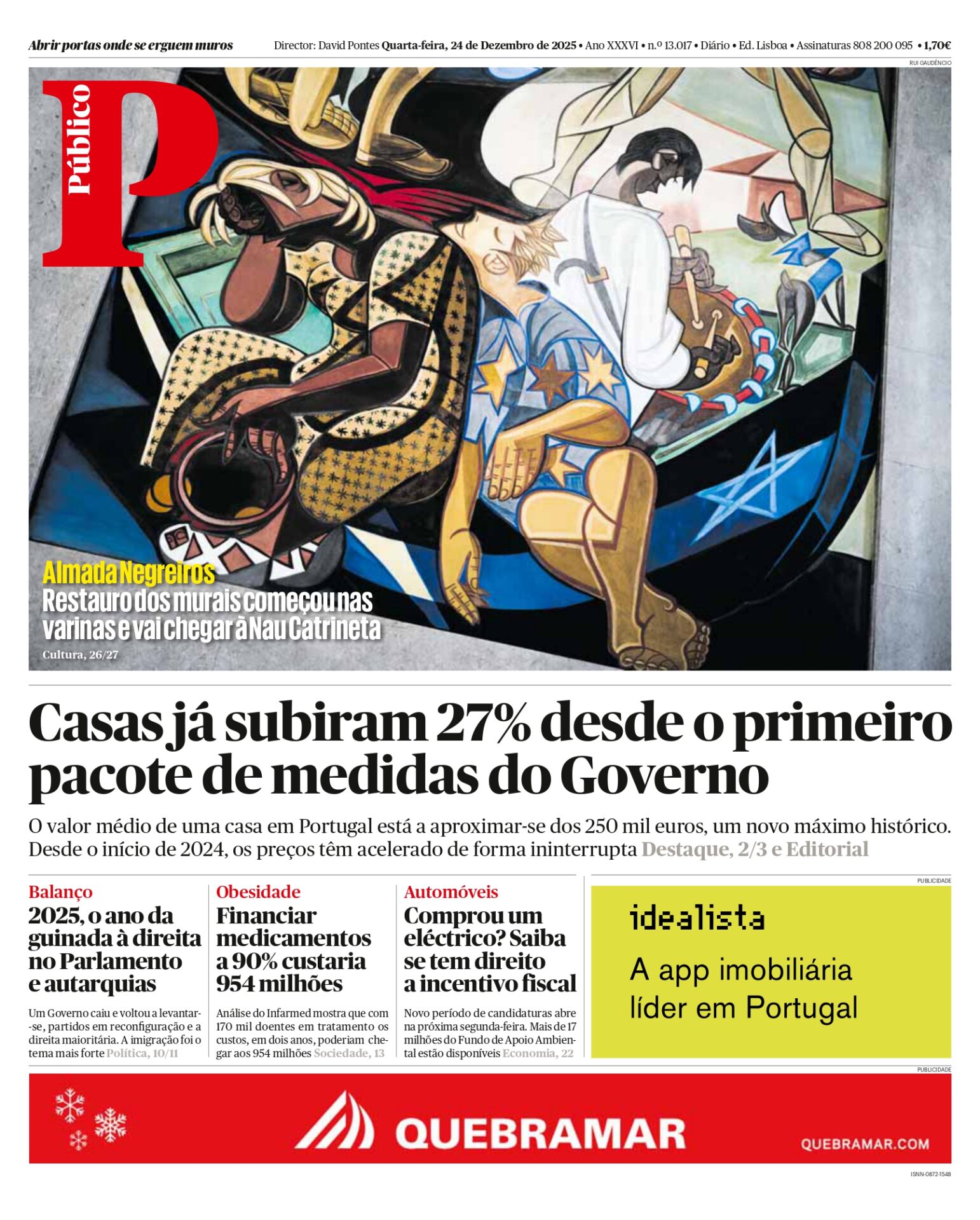
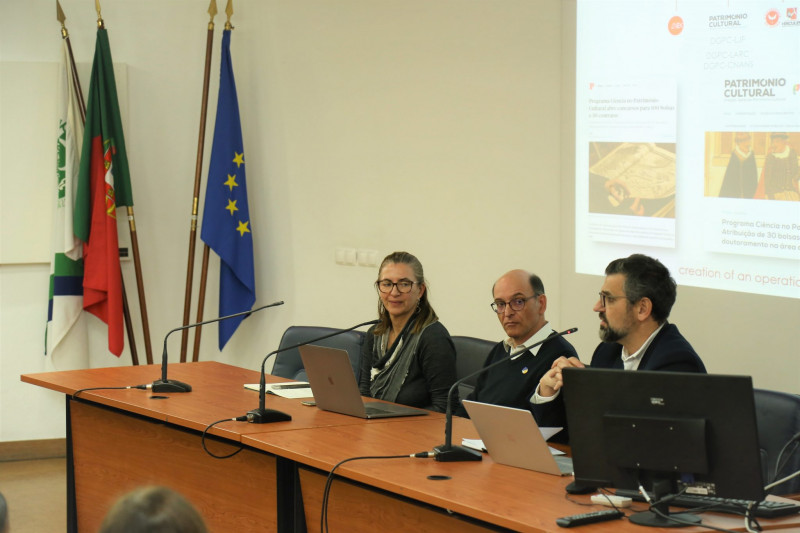
IMAGE From left to right: Assistant Deputy Director for Research Cristina Brito; Manuel Pedro Ferreira, from CESEM; and António Candeias, from HERCULES
© NOVA FCSH